Table of Contents
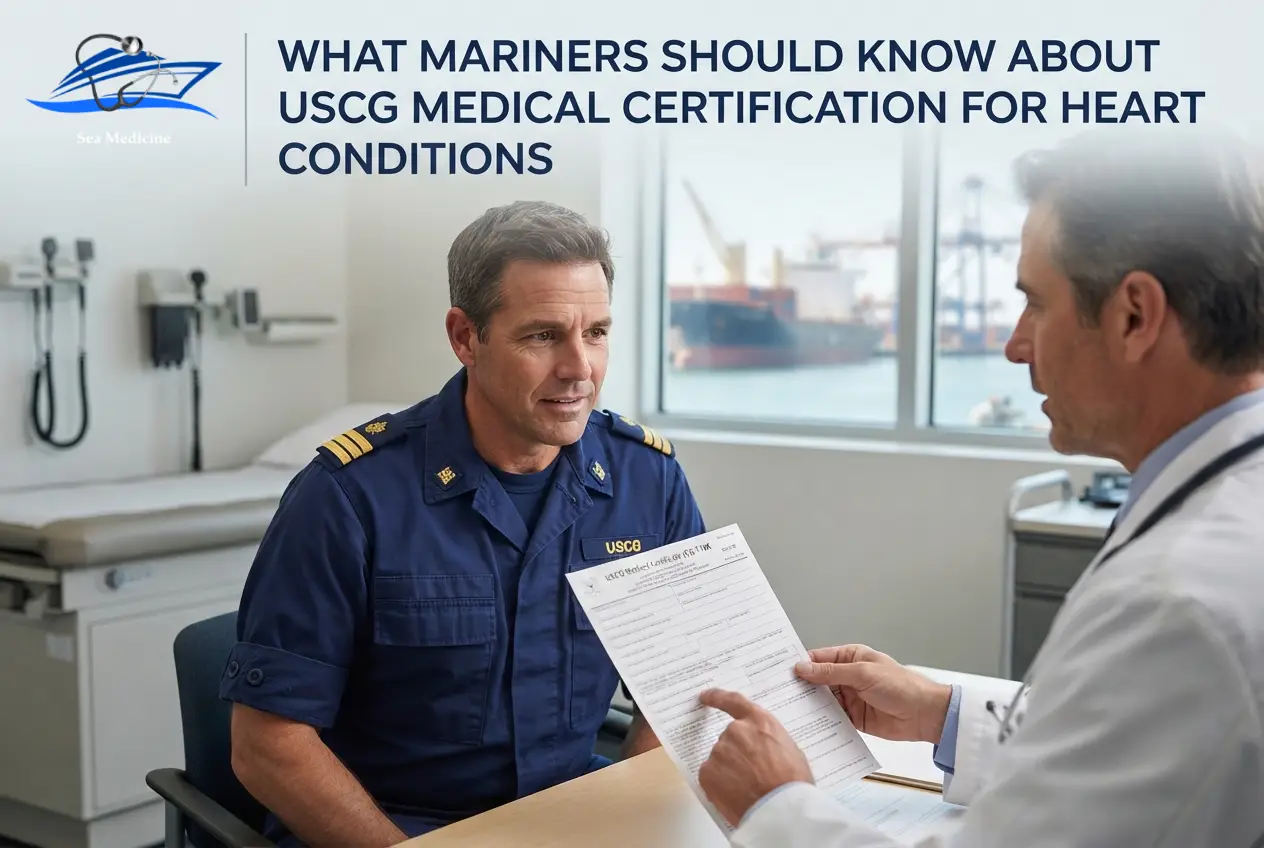
Having a heart problem does not guarantee that you will not qualify for a medical certificate issued by the Coast Guard. All that matters is your present medical state, medical treatment, symptoms and if the problem poses a risk to your safety when working.
The USCG medical certification for heart conditions process may require additional medical records, cardiac testing, or information from a treating physician. The CG-719K form will require mariners to inform about their cardiovascular disorders, heart attacks, valve disorders, heart surgeries, pacemakers, and defibrillators.
When you are preparing to go through a medical examination, it will be useful to know what kind of information may be required.
How Heart Conditions Can Affect USCG Medical Certification
The Coast Guard’s concern is not simply whether you have been diagnosed with a heart condition. It is whether that condition could affect your ability to safely perform your duties.
Particular attention may be given to conditions that could increase the risk of sudden incapacitation, fainting, serious cardiac events, or reduced physical capacity. These factors are also relevant to the Essential Health Criteria for US Coast Guard Medical Certification.
The review may consider:
- Your current symptoms
- Treatment and medications
- Previous cardiac events
- Surgical or procedural history
- Cardiac test results
- Current functional capacity
- Whether the condition is stable
In other words, the diagnosis is only part of the picture. The Coast Guard also considers your current health and ability to safely perform your duties.
What Heart Conditions Does the USCG Review?
The CG-719K includes a wide variety of heart problems. Therefore, accurate information regarding one’s health is vital.
Coronary Artery Disease and Heart Attacks
A previous heart attack or coronary artery disease may lead to additional medical review.
A coronary artery disease mariner medical certificate review may look at your treatment history, current symptoms, medications, and available cardiac testing.
If you’re wondering can you get a captain’s license after a heart attack, there is no single answer for every mariner. Your current health and the applicable Coast Guard requirements need to be considered.
Arrhythmias and Heart Rhythm Problems
Heart rhythm problems can vary widely. Some are minor, while some can be treated with drugs, surgery, or by an implantable device.
The medical evaluation will take into account the type of arrhythmia, its symptoms, treatment, and stability of the condition.
Heart Valve Conditions
Valve disease and previous valve procedures should be disclosed as part of your medical history.
A heart valve replacement mariner medical waiver could include documents regarding the nature of the surgery, current valve condition, medications, and follow-up.
Heart Failure and Cardiomyopathy
Heart failure and cardiomyopathy can affect cardiac function and physical capacity.
Recent medical information can help show your current symptoms, treatment, functional status, and response to care.
What Medical Records Does the USCG Require?
There is no single set of records that applies to every cardiac condition. The documentation requested will depend on your medical history and the circumstances of your application.
Useful records may include:
- Cardiology reports
- ECG results
- Echocardiograms
- Stress-test results
- Hospital records
- Surgical or procedure reports
- Current medication information
- Recent follow-up notes
If you are scheduling Medical Exams for Mariners, ask what records you should bring before your appointment. Having relevant documentation ready can help the medical examiner understand your current condition.
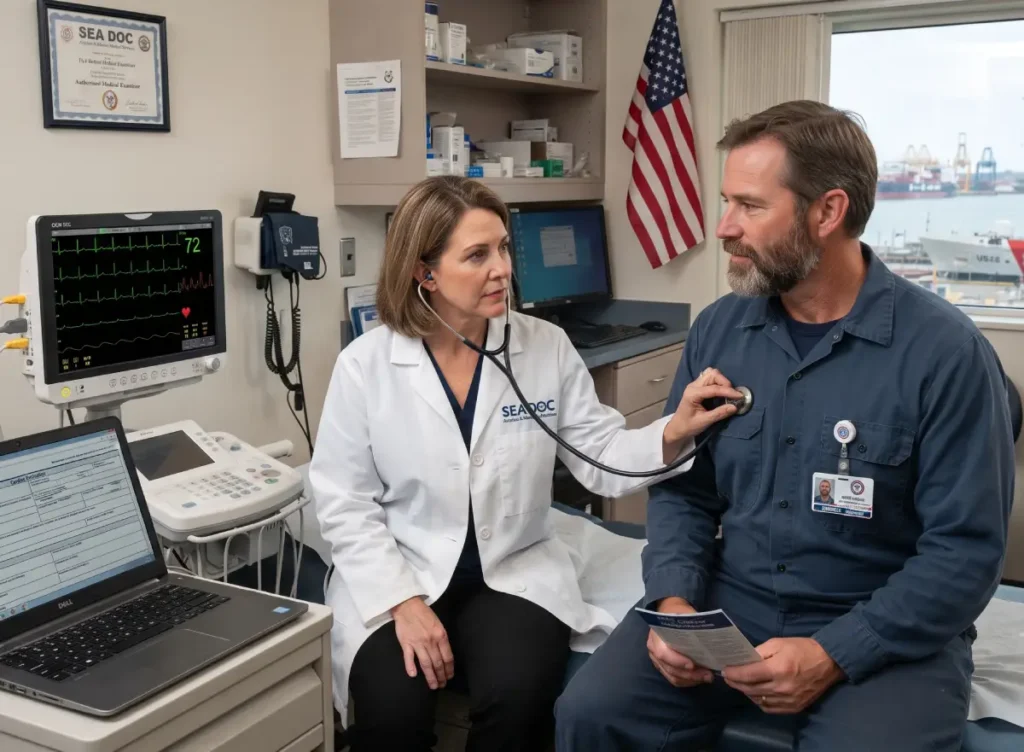
Have a Cardiac History to Report?
A heart attack, cardiac procedure, or implanted device may require additional documentation. Sea Medicine, led by Dr. Weinberg, can help mariners understand the medical requirements for USCG examinations.
Call (727) 648-2402 or email aweinberg@medavex.org for guidance.
When Can a Heart Condition Lead to a Waiver?
Some cardiac conditions may require additional review under the applicable Coast Guard medical standards.
A USCG cardiac waiver merchant mariner application may require medical documentation explaining the condition, treatment, and current status.
A waiver is not simply a way around medical requirements. It is part of the evaluation process where necessary, and the decision will depend on the particular situation.
What Can Cause a Medical Certificate to Be Delayed or Denied?
An incomplete documentation may delay an already complicated procedure even further.
Common issues include:
- Missing medical records
- Unavailable test results
- Unclear diagnosis or treatment history
- Lack of current medical information
- Failure to respond to an additional-information request
The CG-719K requires applicants to provide accurate medical information. If you have a cardiac history, make sure your CG-719K heart condition disclosure is complete and accurate.
Do not assume an old condition is irrelevant. Provide the required information and let the medical review decide on any further documentation.
How Can Mariners Prepare for a USCG Medical Evaluation?
A little preparation goes a long way.
- Review your cardiac history
Know your diagnosis, previous procedures, major cardiac events, and current treatment. - Gather recent records
Keep relevant cardiology reports and test results together. - Prepare your medication list
Include current medications and dosages. - Complete the CG-719K carefully
Read the questions closely and disclose the conditions that apply to you. - Ask about additional documentation
If you have had heart surgery, valve replacement, or an implanted device, check whether supporting records are needed.
If your appointment includes a Physical Examination for Mariners, please follow the instructions of the examining physician and get ready for this part separately.
What Happens After Submitting Additional Medical Documentation?
At times, the Coast Guard requires additional information in order to complete the medical review.
The request could relate to your:
- Diagnosis
- Symptoms
- Treatment
- Cardiac testing
- Surgery
- Current medical status
Read the request carefully and provide the specific information being asked for. Sending unrelated records may not resolve the issue.
If you are unsure what documentation is relevant, your medical examiner or treating physician can help you understand what records are available.
When Should Mariners Seek Help With Their USCG Medical Certification?
Getting guidance before submitting the application might prove beneficial if you have a major cardiac history, recent heart surgery, a pacemaker, or some other health issue that might warrant further assessment.
This will be helpful if you do not know how to provide documentation about your past heart attack or heart surgery.
Keep in mind that a medical certificate is just one component of the entire process of credentialing. Some other requirements like Drug Testing for Mariners might need to be sorted out independently.
Key Takeaways
- A heart condition does not automatically determine your certification outcome.
- The Coast Guard may consider the risk of sudden incapacitation.
- Cardiac conditions should be disclosed accurately.
- Medical records and recent testing may be requested.
- A waiver does not guarantee certification.
- Complete documentation can help avoid unnecessary delays.
Preparing for Your USCG Medical Review
The medical review focuses on your individual circumstances, not just the diagnosis. Knowledge about the USCG medical certification for heart conditions procedure will assist you to submit the necessary paperwork and medical documentation.
In case you have experienced a heart attack, heart operation, valve replacement, arrhythmia, or need to know about pacemaker USCG medical certificate, consult a certified medical specialist for your personal needs.
Sea Medicine, under the leadership of Dr. Weinberg, provides medical services tailored to meet the needs of mariners and boaters. Their team can help you understand the medical documentation needed for your examination.
For questions or help preparing for your USCG medical examination, contact Dr. Weinberg at aweinberg@medavex.org or (727) 648-2402.
FAQs - USCG Medical Certification for Heart Conditions
Can you get a merchant mariner medical certificate after a heart attack?
It may be possible. The outcome depends on your current health, treatment history, medical documentation, and applicable Coast Guard requirements.
Does a pacemaker automatically disqualify you from a USCG medical certificate?
Not automatically. A pacemaker USCG medical certificate review may require information about the device, underlying condition, and current medical status.
What does the Coast Guard require for a coronary artery disease waiver?
Requirements can vary by case. Medical records, current testing, treatment information, and other supporting documentation may be requested.
How long after heart surgery can a mariner apply for a medical certificate?
There is no single timeline for every type of heart surgery. Recovery, current medical status, and applicable Coast Guard requirements all matter.
What's the difference between a limited certificate and a full waiver for cardiac conditions?
They are not necessarily the same. The applicable certification or waiver depends on the mariner’s circumstances and credential requirements.
Do you need a cardiologist's letter for your CG-719K if you have a heart condition?
It may be requested depending on your condition and medical history. Relevant cardiology records can help document your current status.