You’ve been on the same prescription for years. Your condition is under control, you feel good, and you’re ready to get back to work on a vessel. Then your medical exam gets closer, and you start wondering if that medication could cause a problem.
Questions about USCG medical certificate medication requirements usually come down to whether your condition and treatment fit the duties you may have to perform. Taking a prescription doesn’t automatically mean you’ll be turned down.
Knowing what the Coast Guard looks at, what you have to disclose, and which records to gather can help you avoid unnecessary delays.
Does Taking Medication Long Term Automatically Disqualify You?
No. Being on medication for a long time doesn’t automatically disqualify any mariner. The Coast Guard looks at each applicant’s medical situation before making a decision.
Take two people on the same medicine. One has a well-managed condition and no side effects. The other feels drowsy or dizzy, and that could affect their safety on the job. Their reviews will look different.
The National Maritime Center flags chronic use of impairing medications as a possible reason for extra review or delays. Good supporting medical information can make your health and treatment history clearer.
If you’re searching for health criteria for US coast guard medical, begin with the official medical standards published for certification. They’re the best place to see what applies to you.
What Are the USCG Medical Certificate Medication Requirements?
In conducting a review of the medication that will impact the USCG medical certification, the Coast Guard considers the medication, the condition it treats, and any safety concerns.
Could a prescription affect your ability to stand watch, respond to an emergency, or stay alert through a long shift? Those are the kinds of questions that come up during the medical review.
The Coast Guard may give more scrutiny to those medicines that result in heavy sedation, poor coordination, dizziness, and reduced alertness. Still, a medication’s name alone doesn’t decide whether you qualify.
Can Blood Pressure or Mental Health Medication Affect Approval?
Medications for high blood pressure as well as anxiety and depression conditions can require special attention. This is due to the type of your medical condition, stability of your treatment, and the side effects that you have.
Your provider will have to prove the control of your blood pressure or the influence of your psychotropic drugs on your alertness. Use of such medications does not mean that you will definitely be refused.
What Should Be Disclosed on Form CG-719K?
Form CG-719K is the Application for Merchant Mariner Medical Certificate. The form’s medication section requires disclosing relevant medications and vitamins.
The CG-719K medication disclosure requirements spell out which products you need to report and the time periods that apply. Read the current instructions yourself instead of relying on memory or assuming a long-term prescription doesn’t need to be listed.
You can find the official CG-719K application and instructions through the National Maritime Center.
Accurate reporting matters even if you’ve taken a medication for years or rarely notice side effects. If you’re not sure whether something belongs on the form, ask the medical practitioner doing your exam.
What Medical Records Should You Bring?
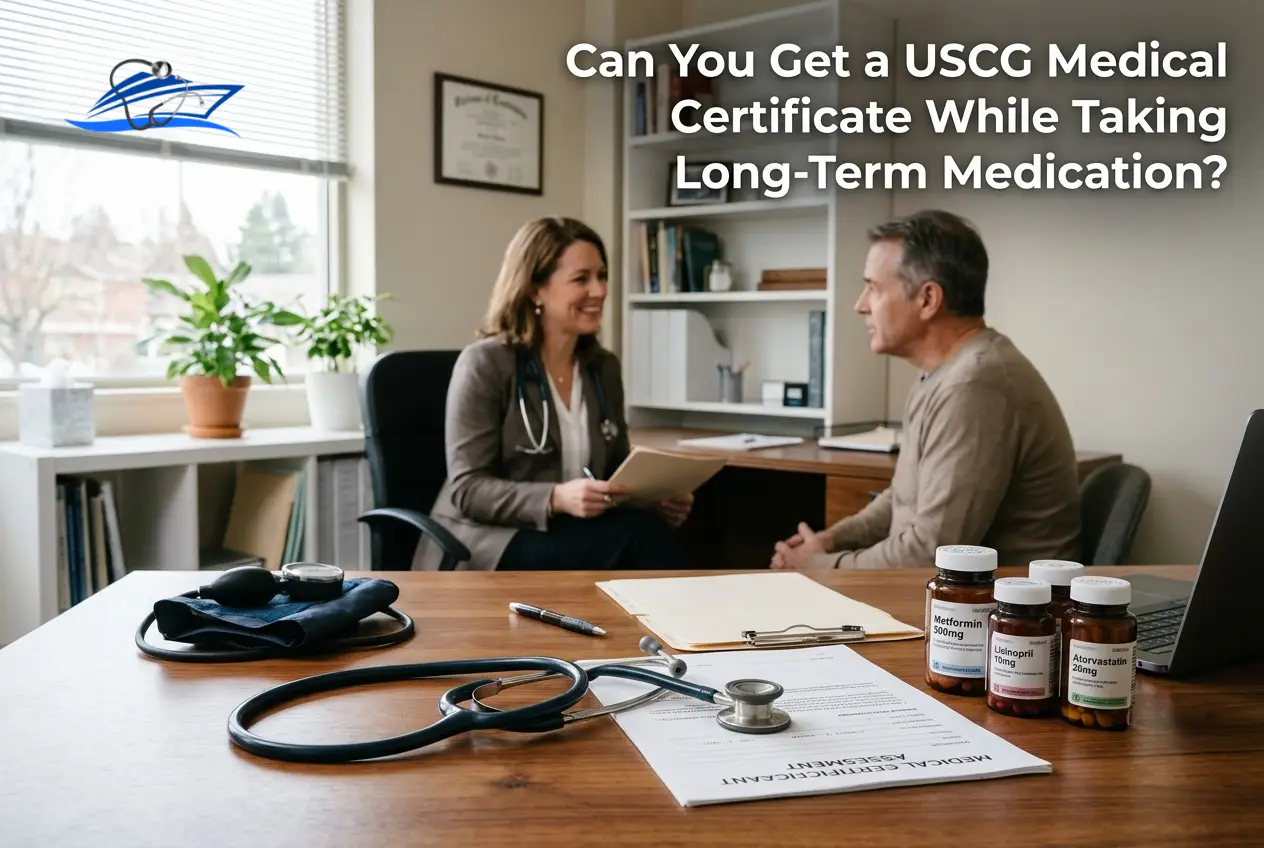
Solid USCG medical certificate medication documentation will help clarify your health issues, medications used and where you stand in terms of your current health status.
In line with your specific case, some of the documentation you may require include your most recent medical files, test results, specialists’ reports and an overview of your case by the treating physician. These can cover your diagnosis, your treatment history, how stable your medication is, and any side effects.
When you’re getting ready for a Coast Guard medical exam prescription medications review, remember that the clinician may need more than just the name of your prescription.
Your physician must properly characterize your treatment and discuss any problems regarding your capacity to perform your job duties safely
Preparing for Your USCG Medical Exam?
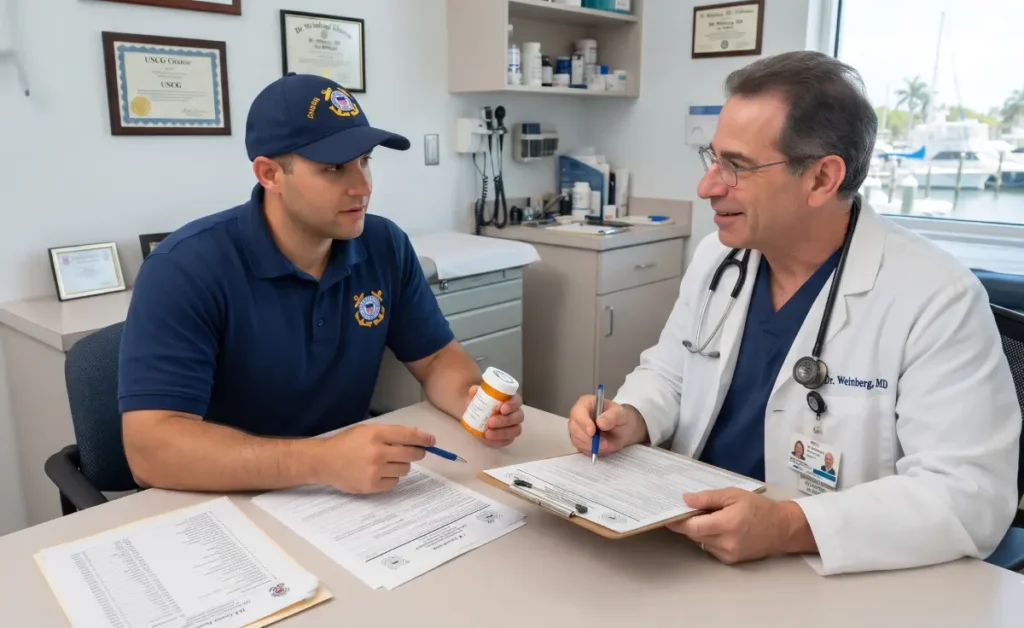
Having knowledge of the documents that need to be brought and how to report on the medications you take can help you pass this exam. Sea Medicine conducts marine medicine examinations in Florida, with the exam and necessary documentation performed by Dr. Weinberg.
Contact us at (727) 648-2402 for additional information.
What if Your Medication Has Side Effects?
Despite the control of your condition, side effects may be mentioned in the review as well. Inform your medical professional about any drowsiness, dizziness, vision problems, and difficulties concentrating.
Do not discontinue or alter any prescriptions prior to your evaluation in an effort to prepare for it. Discuss with your prescribing medical professional and ensure that your medical records reflect your current situation.
Any change in your treatment plan must also be reported. A USCG medical examiner for mariners may need your current information and can tell you whether more documentation is needed for your exam.
What Happens If the Coast Guard Requests More Information?
Sometimes the first application doesn’t include enough information to make a decision. The National Maritime Center may ask for more records, test results, or clarification from your healthcare provider.
Respond carefully and send what they request. Missing details are one of the most common reasons decisions get delayed.
A medical waiver may be considered in some situations, but approval isn’t guaranteed. The Coast Guard has the final say on certification.
For current forms, certification instructions, and related guidance, check the official USCG merchant mariner medical certificate resources on the Coast Guard’s website.
How to Prepare for Your Coast Guard Medical Exam
A little preparation can go a long way.
- Make sure that you have your medications ready. This should include all medications listed in the CG-719K form.
- Bring your paperwork. This should be paperwork describing your medical condition and treatment.
- Discuss side effects. It is important to discuss any side effects from previous medications.
- Review your application. Make sure everything is complete and accurate.
- Follow up quickly. Send any extra records the Coast Guard asks for.
Make a merchant mariner medical exam medication list with each medication’s name, dose, how often you take it, and the condition it treats, following the application instructions.
Many mariners call their appointment a coast guard physical. Finishing the exam doesn’t guarantee you’ll get a certificate, though.
If you’re wondering whether you can pass a Coast Guard physical on medication, the answer depends on your condition, your treatment, any side effects, and the medical standards that apply to you.
Arrange Your Mariner Medical Exam in Florida
Being on long-term medication doesn’t automatically mean you’ll be denied. Accurate disclosure and the right supporting records help the Coast Guard understand your situation.
Sea Medicine provides mariner medical exams in Florida. Dr. Weinberg can conduct your examination and process your paperwork, although it is up to the Coast Guard to make the final decision on your medical certification.
For the mariner medical exam in West Palm Beach FL, contact Sea Medicine at (727) 648-2402 or 1601 Belvedere Road, Suite E401, West Palm Beach, FL 33406.
The seafarer’s medical certificate obtained according to the other country’s guidelines can be governed by other criteria. Ensure that the criteria required for your particular position, ship, and licensing are identified before booking your appointment.
FAQs
Will I have to cease taking my medication before I take my test?
No. You should never change or stop your medications without first discussing this with the person who prescribes them for you. Any concerns about potential side effects or your ability to perform work-related tasks should be discussed beforehand.
A stable condition assure me of being medically qualified?
No. Stable condition will provide background information but will not assure your qualification as determined by the medical review of the Coast Guard.
If there is a change in my medication dosage prior to my appointment?
Discuss the change in dosage with the medical practitioner. Updated information may be needed to show your current treatment.
What if I don’t experience any side effects?
Fill out all required disclosures accurately. Not noticing side effects doesn’t excuse you from reporting medications when the form requires it.
Who makes the final medical certification decision?
The examining medical practitioner completes the exam and the paperwork. The Coast Guard makes the final call on whether to issue the certificate.